
Ma’in Hot Springs Resort & Spa, Jordan
 Ma'in Valley, Jordan
|
97 Rooms
|
Ma'in Valley, Jordan
|
97 Rooms
|
About this resort
By DeadSea.com Editorial Team
Ma’in Hot Springs Resort & Spa is a 97-room mountain-valley retreat southwest of Madaba, built around natural hot-spring waterfalls and the standalone Cascade Spa. It is not a Dead Sea beachfront hotel. Choose it for thermal water, valley scenery, and an overnight stay in a remote setting. Choose a Sweimeh resort instead if walking directly from your hotel to the Dead Sea is the priority.
At a glance
| Setting | Steep mountain valley at Hammamat Ma'in, southwest of Madaba |
| Main experience | Natural hot-spring waterfalls, thermal pools, and Cascade Spa |
| Dead Sea access | No walk-out Dead Sea beach; reaching the shore requires a separate road transfer |
| Rooms | Rooms and suites with balconies or terraces and mountain, valley, pool, or waterfall views |
| Pools | Thermal-water areas and outdoor swimming pools, with access schedules that can differ |
| Food | Several restaurants and bars, including the Olive restaurant and Wine Cellar |
| Best fit | Couples, families, and wellness travelers who want to stay in the hot-springs valley |
Amenities
 Cascade Spa with natural waterfall
 Thermal pools
 Swimming pools
 Steam cave
Spa treatment rooms
Steam cave
Spa treatment rooms
 Fitness Center
 Restaurants
 Bar
Bar
 ROOM SERVICE
 Event Spaces
 Air Conditioning
 WIFI
WIFI
 PARKING
Rooms and suites
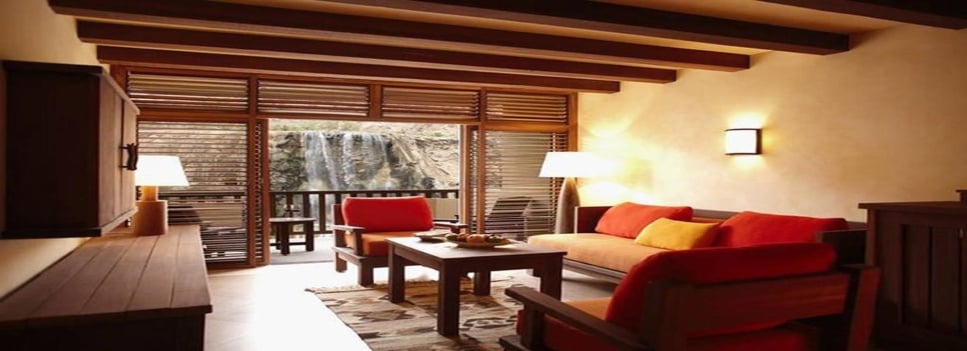
Accommodation includes rooms and several suite categories. Rooms include air conditioning, private bathrooms, tea and coffee facilities, minibars, safes, work areas, and balconies or terraces. Views vary between mountains, valley, gardens, pools, and the waterfall, so the exact category has a meaningful effect on the stay.
Some suites overlook the waterfall or thermal pool, while family and larger suite options provide more space. Check the selected room’s size, view, balcony, bed arrangement, maximum occupancy, and access route. A general property photograph may show a waterfall view that does not apply to every room.
The resort occupies uneven valley terrain. Travelers with limited mobility should ask about the route from parking and reception to the room, restaurants, pools, waterfalls, and Cascade Spa. An accessible room does not necessarily establish that every natural or wet area is step-free.
Hot springs, waterfalls, and pools
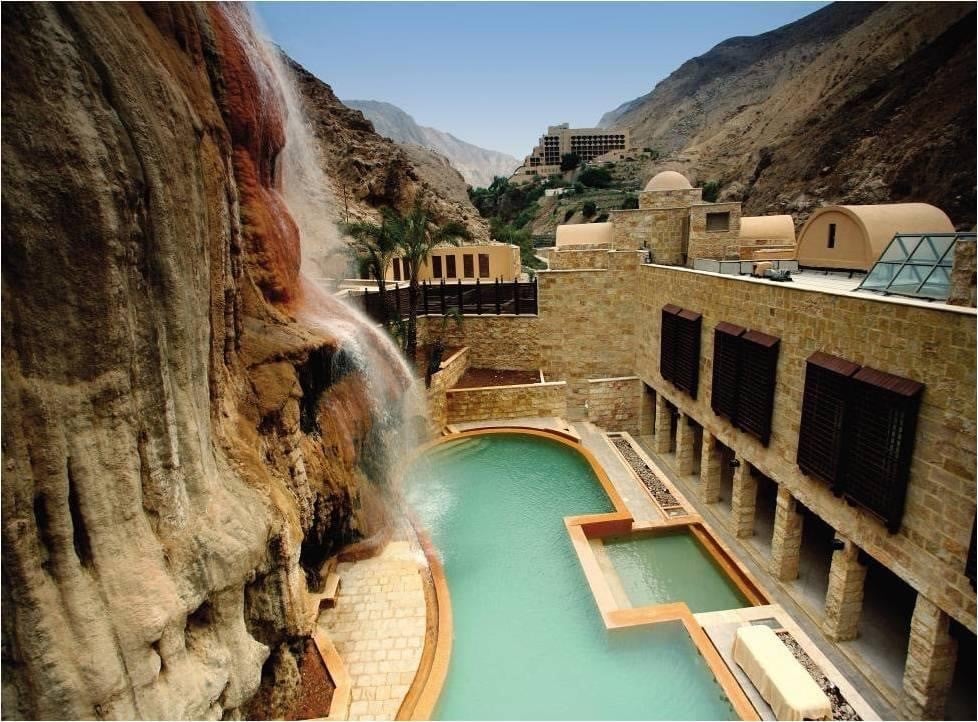
The resort’s identity comes from Hammamat Ma’in’s natural hot-spring waterfalls. Water flows through the valley into thermal pools and bathing areas, creating an experience that is very different from a conventional freshwater resort pool. The water can be extremely hot, so follow posted temperature, time, and access guidance and supervise children closely.
Some hot-spring areas serve day visitors as well as hotel guests. The resort can reserve early access periods for overnight guests, but schedules and available waterfalls can change because of weather, maintenance, water conditions, or safety restrictions. Ask which thermal areas are open to overnight guests before choosing the room for that reason.
The property also has outdoor swimming pools. Pool layouts and access schedules vary, so focus on which specific pool is open, heated, family-accessible, and included with the room rather than relying on a single total.
Cascade Spa
Cascade Spa is a separate stone building in the valley beneath a natural hot-spring waterfall. Its setting is the reason to consider it: the spa is integrated with the thermal-water landscape rather than placed inside a generic hotel corridor. Facilities and services include treatment rooms, thermal-water features, a steam cave, massages, body treatments, and hammam-style experiences.
Spa treatments are separate purchases, and access to the spa building or thermal facilities should not be assumed from a room booking. Reserve before arrival, ask what the treatment includes, and confirm the route between the main resort and spa. Treat the spa as a wellness or relaxation experience. Anyone with a health concern should ask an appropriate clinician whether hot-water bathing or a particular treatment is suitable.
Dining and the value of staying overnight
Dining includes the Olive restaurant, the Wine Cellar, poolside options, and other bars or restaurants that may operate on different schedules. Traditional zarb dining in a Bedouin-tent setting may also be available. As at many remote resorts, not every venue opens for every meal, so check the operating lineup and meal-plan inclusions for the selected dates.
The value of staying overnight is access to the valley after day-trip pressure eases, the ability to book spa time without a same-day return drive, and the chance to use any guest-only hot-spring period offered during the stay. That value depends on the operating schedule, room condition, and package. It should not be reduced to a promise that every waterfall or spa facility is automatically included.
Who should choose Ma'in Hot Springs?
Choose Ma’in if the hot-spring valley is the destination and you want more time there than a short day visit allows. It can suit couples, wellness travelers, and families prepared for hot water, wet surfaces, and a remote setting. It also works as a different kind of stop between Madaba and the Dead Sea region.
It is a poor fit for travelers whose main goal is to float in the Dead Sea from the hotel, or for anyone expecting a flat beachfront resort strip. Guests sensitive to mountain roads, steep paths, or variable access to natural features should review the route and facility status carefully.
Pros and cons
Pros
- Unusual valley setting built around natural hot-spring waterfalls
- Cascade Spa and thermal-water facilities create a distinct wellness stay
- Overnight guests can enjoy the resort without making a same-day return journey
Cons
- No direct Dead Sea beach or walk-out access to the shore
- Mountain roads and uneven terrain can complicate access and mobility
- Waterfall, thermal-pool, spa, and day-visitor arrangements can change
Cascade Spa with natural waterfall
Thermal pools
Swimming pools
Steam cave
Spa treatment rooms
Fitness Center
Restaurants
Bar
ROOM SERVICE
Event Spaces
Air Conditioning
WIFI
PARKING
 Location and Surroundings
Ma’in Hot Springs Resort is in the Hammamat Ma’in valley southwest of Madaba. It sits below the surrounding plateau in a dramatic mountain landscape. The resort is part of Jordan’s wider Dead Sea region, but it is inland and separated from the Dead Sea shore by a road journey.
Use the exact hotel map for the final approach and allow for a winding descent into the valley. Madaba, Mount Nebo, the Sweimeh resort corridor, and the Dead Sea shore are separate destinations. Map each one individually and check weather and road conditions, particularly if the itinerary depends on a fixed airport, tour, or border time.
Frequently asked questions
Is Ma'in Hot Springs Resort on the Dead Sea shore?
No. The resort is inland in the Hammamat Ma’in mountain valley and has no walk-out Dead Sea beach. Its water experience is based on natural hot-spring waterfalls and thermal pools. Reaching a Dead Sea beach requires a separate road transfer to a suitable shore or resort access point.
Are the hot springs included for hotel guests?
Hotel guests have access to resort facilities according to the current room package and operating schedule, and some periods may be reserved for overnight guests. Public day visitors can also use parts of the hot-springs complex. Ask which waterfalls and thermal pools are open and included before booking around a specific feature.
Is Cascade Spa included in the room rate?
Spa treatments are normally separate from the room price, and entry to particular thermal or wet areas can depend on the package. Reserve treatments in advance and ask exactly what the price includes. The spa is in a separate valley building, so travelers with mobility needs should also check the access route.
Can I visit Ma'in Hot Springs without staying overnight?
Day access is available to parts of the hot-springs area, but entry fees, opening times, available waterfalls, and hotel-spa access can change. Check the current day-visitor arrangement before driving into the valley. An overnight booking is useful when you want more time, a room, and easier access to a reserved spa appointment.
Is the resort suitable for families?
Families have larger accommodation options, swimming pools, and dining, but the setting needs close supervision. Thermal water can be very hot, and wet or rocky surfaces can be slippery. Check the children’s access rules for each pool, waterfall, and spa area, along with the exact family-room occupancy.
When is the best time to visit?
Many travelers find hot-spring bathing more comfortable in cooler weather, but there is no single guaranteed season for every facility. Weather, water flow, maintenance, and road conditions can affect access. Choose dates by checking the current waterfall and pool status, then plan the valley drive around daylight and your wider itinerary.