Overview
By DeadSea.com Editorial
Last reviewed: September 2026
Summer at the Dead Sea works best as a resort-first trip, not a full outdoor touring season. At the Israel Meteorological Service’s Sedom station, the 2006 to 2020 average daily maximum was 39.0°C in June, 41.0°C in July, 40.9°C in August, and 37.9°C in September. Plan around air conditioning, current heat warnings, and the option to cancel every exposed activity.
A carefully managed beach visit, hotel stay, and one confirmed site can still make a good trip. A long list of hikes, fixed clock times, and no indoor fallback cannot.
Is a summer visit right for you?
| Summer may suit you if | Consider another season if |
|---|---|
| You want a hotel-based break | You want several exposed hikes or outdoor sites each day |
| You can move easily between a cooled room and managed beach | Severe heat makes your health or medication plan uncertain |
| You will shorten or cancel outdoor plans without trying to recover them later | Your trip depends on a day pass or facility that has not confirmed access |
| You have checked children’s, mobility, and beach arrangements | Your group cannot use a reliable air-conditioned base |
People with health conditions, pregnancy, heat-sensitive medication, or fluid restrictions should obtain personal guidance from a qualified clinician before committing to a hot-weather itinerary.
Summer works when the hotel is the destination and outdoor time is optional. A sunrise start, shaded bench, or warm float cannot override an official warning or a traveler’s condition.
How hot is each summer month?
| Month | Average daily maximum | Average daily minimum | Main planning effect |
|---|---|---|---|
| June | 39.0°C | 28.9°C | Severe heat can begin early and nights remain warm |
| July | 41.0°C | 30.8°C | Outdoor touring is heavily constrained |
| August | 40.9°C | 31.3°C | Heat persists overnight and cooled recovery matters |
| September | 37.9°C | 29.9°C | It remains hot after many summer holidays end |
These are 2006 to 2020 air-temperature averages from one southern Dead Sea station. They help compare months, but they are not a forecast for your date, the water temperature, or a particular trail.
Use the Dead Sea weather guide for context, then check the current Israel Meteorological Service warning. Never convert an average into a rule such as “always safe before 09:00.”
How should you build the day?
Begin with one outdoor objective and one dependable indoor alternative. Check conditions before leaving the room, again before entering a park or beach, and after any long drive.
| Period | Possible plan | Required check |
|---|---|---|
| Early morning | One short park visit or supervised float | Heat warning, route opening, and lifeguard service |
| Late morning to afternoon | Hotel, indoor venue, meal, and rest | Air conditioning, water, and facility access |
| Late afternoon | Reassess before going out | Current heat load, site hours, and personal wellbeing |
| Evening | Short promenade or indoor activity | Remaining heat, local instructions, and transport |
Spare time is useful. It absorbs a closure, slower group member, heat-related fatigue, or delayed transfer without pushing the next activity into a worse period.
The dated summer 2026 status guide carries current park restrictions for this season. In a later year, use the newest status page and responsible-authority notices.
What heat-safety rules matter?
Israel’s Ministry of Health advises following the forecast, limiting time and physical activity in hot weather, and using air conditioning or shade during peak heat. It also recommends light clothing, a broad-brimmed hat, sunglasses, sunscreen, and regular water intake.
Carry water, know where you can replace it, and drink regularly. Do not follow a universal per-hour dose from a travel article. Needs vary with health, body, activity, medication, and conditions, while anyone instructed to limit fluids needs personal medical advice.
Heat exhaustion can include heavy sweating, dizziness, weakness, headache, nausea, or faintness. Confusion, loss of consciousness, or other severe symptoms require urgent medical help. Move out of the heat, call emergency services, and follow professional instructions.
Never leave a child or dependent person in a parked vehicle. Keep medication with you and follow its temperature-storage instructions.
Medical disclaimer: This guide provides general travel-safety information and does not replace advice from a clinician. Personal hydration, medication, pregnancy, chronic-condition, and heat-exposure decisions require qualified guidance.
How should you plan a summer float?
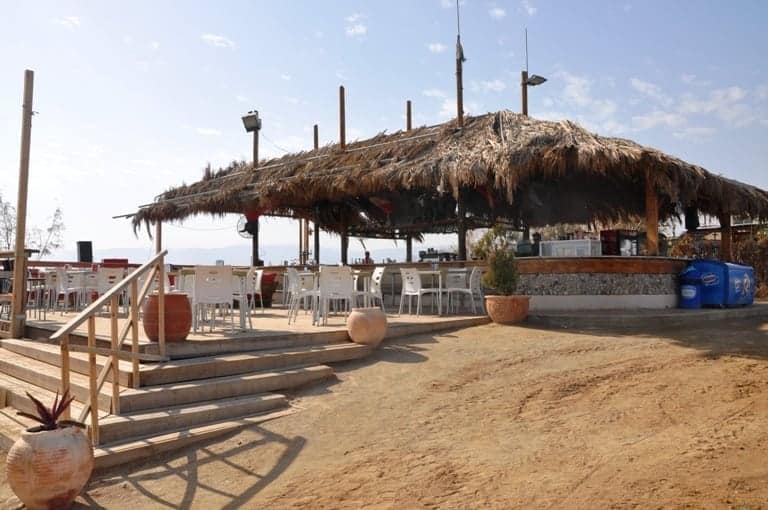
Choose an official bathing area and enter only while lifeguard service is active. Ein Bokek Beach is a practical starting point, but check the day’s operation, shade, showers, and access before leaving the hotel.
Enter slowly and remain on your back. Do not dive, jump, splash, or put your face in the water. Keep the water away from your eyes and mouth, rinse after leaving, and stop if you feel dizzy, weak, nauseated, or unwell.
Dead Sea water may feel warm and should not be treated as cooling. A float is not a substitute for air-conditioned recovery. The floating guide explains technique, while the Dead Sea safety guide covers the broader risk picture.
Buoyancy changes body position, not the need for supervision. Use a declared beach, keep children within immediate reach, follow the lifeguard, and leave at the first sign of distress.
Can you visit Masada in summer?
Yes, when your chosen route is open and current conditions allow it. Masada National Park uses heat-dependent cutoffs for the Snake Path and other routes. The last ascent can be hours earlier than the general park closing time. Use the Masada guide for orientation before checking the current park notice.
Decide whether you plan to use the cable car, Snake Path, or Roman Ramp. Check the current notice for that route, reserve if required, and allow enough time to return before the cutoff. A sunrise plan does not prove the path is open or suitable. If the park closes a route, use a permitted alternative or cancel.
A long drive or a prepaid tour is no reason to ignore staff instructions.
Can you visit Ein Gedi in summer?
Only on an open route. Ein Gedi Nature Reserve can restrict access because of heat, floods, rockfall, restoration, or maintenance. Check the exact reserve area and reservation immediately before travel. Use the Ein Gedi guide for orientation, then follow the current reserve notice.
A short route can still be exposed, and water beside a trail does not remove heat stress. Match the plan to the least heat-tolerant person in the group. Avoid streambeds and closed areas whenever flood warnings or barriers are in place.
If Masada and Ein Gedi are both priorities, place them on separate days. Trying to fit both into one summer morning makes the plan vulnerable to delays and encourages unsafe rushing.
How should you choose a summer hotel?
Use the Israel Dead Sea hotel guide and compare summer functions, not star labels alone:
- Reliable air conditioning in the room and indoor public areas.
- A short route to a currently operating beach.
- Indoor or shaded facilities with hours and age rules for every traveler.
- Food and drinking water during peak heat.
- Covered parking or a close drop-off point.
- Flexible cancellation when weather or official restrictions disrupt the outdoor plan or road access.
Do not assume summer produces a fixed discount. Compare the same dates, occupancy, room, meal plan, currency, and cancellation terms. A low price does not compensate for a property that cannot provide the indoor base your trip requires.
Dead Sea Mall may serve as an indoor option in Ein Bokek. Confirm its hours instead of making it the only fallback.
What should you pack?
- Refillable water containers.
- Broad-brimmed hat, sunglasses, sunscreen, and light protective clothing.
- Water shoes and closed walking shoes.
- Dry clothes, a towel or robe, and a separate bag for wet items.
- Prescribed medication stored according to its instructions.
- Charged phone, power bank, offline route details, and saved emergency contacts.
- A light layer for heavily air-conditioned interiors.
The Dead Sea packing list covers the complete trip. Keep water, medication, and your phone with you, not in a hot vehicle.
Frequently asked questions
Is it too hot to visit the Dead Sea in summer?
It can be too hot for outdoor touring even when a hotel stay remains possible. Summer suits travelers who can use air conditioning, a managed beach, and a flexible schedule. Official warnings, park restrictions, and personal wellbeing must be able to cancel the outdoor part.
What is the best time to float in summer?
There is no universal safe clock time. Choose a cooler period only after confirming the heat warning, beach operation, and lifeguard hours. Leave if conditions or your wellbeing change.
How much water should I drink?
A general travel page cannot prescribe an individual amount. Drink water regularly, carry enough for the route, and know where you can refill it. People with fluid restrictions, health conditions, or relevant medication should ask a qualified clinician for personal guidance.
Is Masada open during a heatwave?
The park can shorten path hours or close routes according to the forecast and conditions. Check the official notice for your route on the day and obey staff instructions.
Can children visit the Dead Sea in summer?
They can visit only with a plan suited to their age, heat tolerance, and close-supervision needs. At the water, use an official beach during lifeguard hours and keep the child within reach. Leave immediately if the child becomes confused, dizzy, nauseated, unusually tired, or distressed.
Are summer hotel rates lower?
Not reliably. Prices vary by property, weekday, holiday, room, meal plan, occupancy, and cancellation terms. Compare live like-for-like offers and prioritize a dependable air-conditioned base.