
Visit from Israel
Your western-shore guidePlan a beach day or a longer stay from Israel. Find the right bathing area, compare accommodation and work out how the Dead Sea fits into the rest of your journey.
Explore the Israel guide
The Dead Sea is a salt lake in the Jordan Rift Valley, with Israel and the West Bank to the west and Jordan to the east.
Discover what makes this place different, from its remarkable water to its ancient stories. Then find your way to the shore that fits your trip.
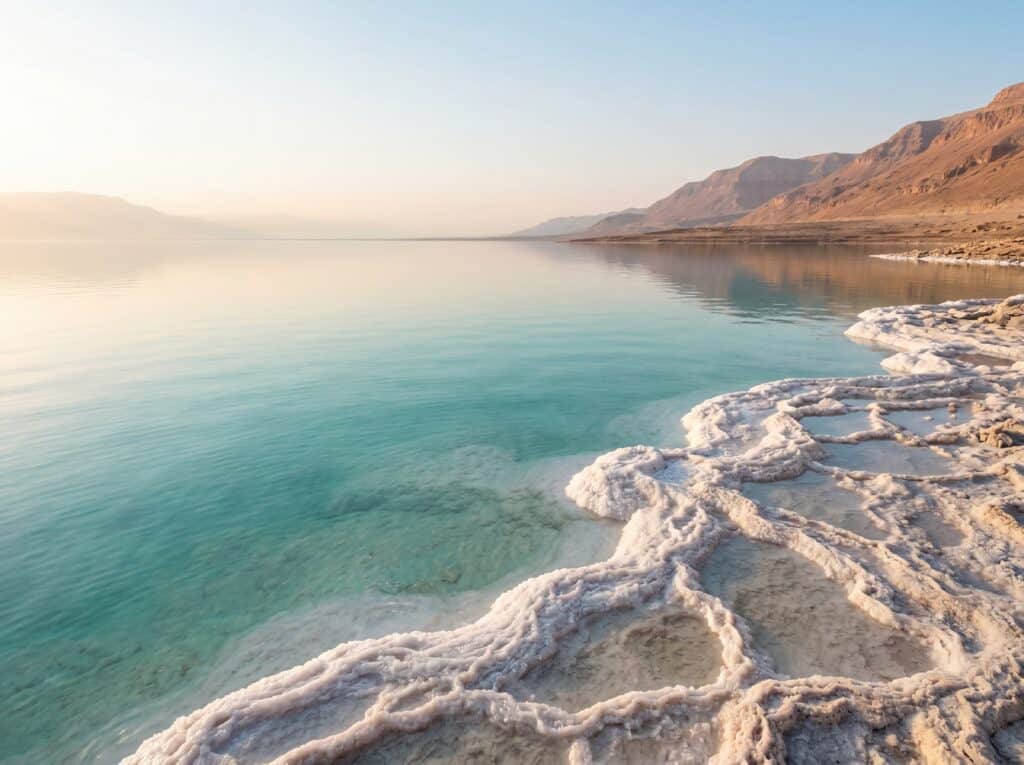
A Dead Sea landscape · Image from DeadSea.com
Start with the country you are travelling in. Each shore has its own routes, beaches and places to stay. You can enjoy the Dead Sea from either side without building a two-country itinerary.
Plan a beach day or a longer stay from Israel. Find the right bathing area, compare accommodation and work out how the Dead Sea fits into the rest of your journey.
Explore the Israel guidePlan a beach day or a longer stay from Jordan. Compare managed beach access, resort day passes and accommodation, then decide how much time to give this part of your journey.
Explore the Jordan guideThere is no ordinary tourist ferry across the lake. A visit to both countries involves a land border crossing and separate entry arrangements.
Travel news & alerts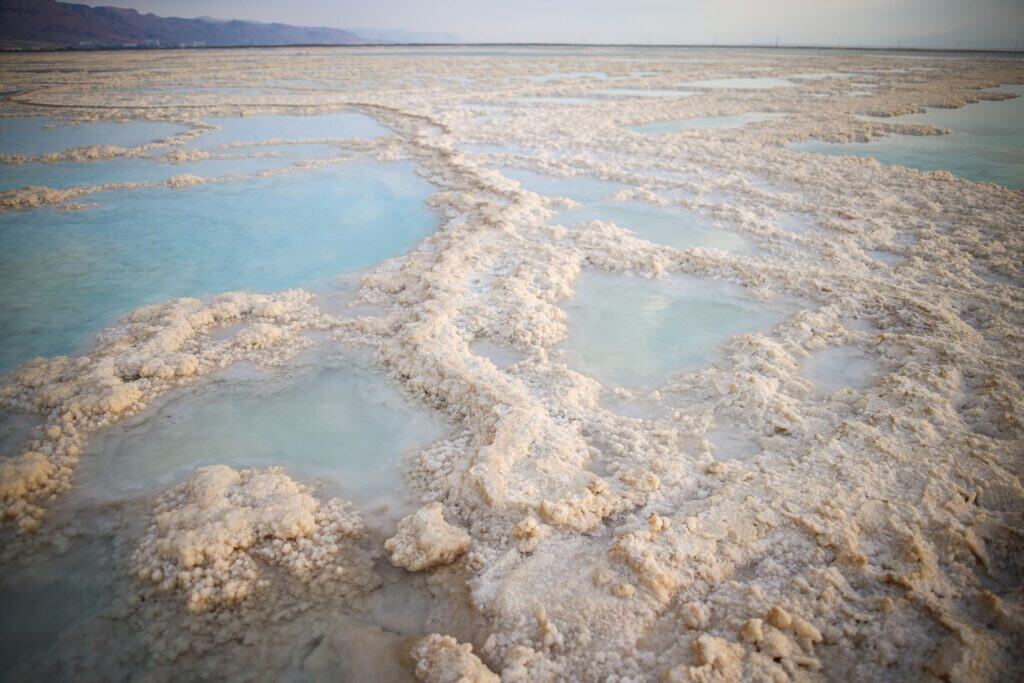 The story behind the name
Why is it called the Dead Sea?
The name suggests an empty world. The explanation is more interesting: concentrated salt excludes fish and much familiar aquatic life, while microorganisms tell a different story. Start here to understand the place beyond its name.
Read the full storySurface elevation, shoreline and water depth are different measurements. Here is how to tell them apart.
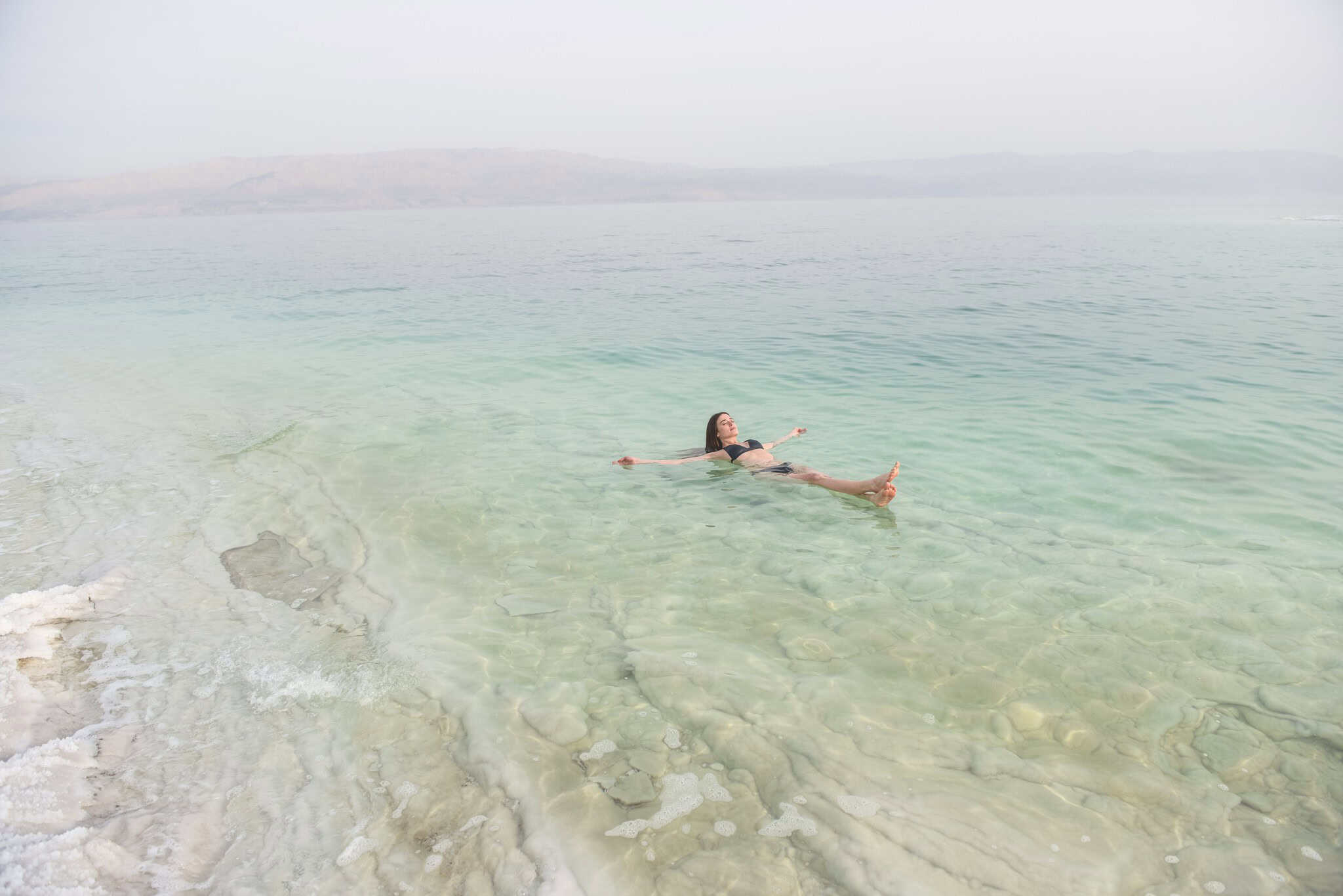
The answer begins with density. The extraordinary buoyancy still calls for a careful first float.
The lake sits between two travel systems. The view may stretch across the water; your transport, accommodation and beach access belong to the country you are visiting.
Orientation diagram only. Not to scale or for navigation; political boundaries are not drawn.
Explore the geographyThe salt-rich brine supports your body more readily than ordinary seawater. Enter slowly, sit before reclining and keep your face clear of the water. Floating is the experience; ordinary swimming strokes create unnecessary splashing.
Use an open, supervised bathing area and follow the lifeguard’s instructions. Do not dive or swallow the water. Buoyancy does not remove the risk of drowning.
Read the swimming and floating rulesThink about the whole day: time in the water, time outdoors, and how much heat you enjoy.
March is a useful starting point for a mixed beach-and-sightseeing trip. Temperatures rise through spring. Check the relevant holiday calendar before fixing dates: Israel and Jordan have different travel rhythms.
Summer is intensely hot. A stay built around shade, cooling and managed beach access is a different proposition from a day of exposed sightseeing. Heat warnings matter more than an ambitious itinerary.
September can still be very hot; November offers a milder starting point for combining a float with outdoor visits. Check country-specific holidays and the forecast for your actual dates.
Winter days can be mild, while mornings, evenings and wet skin feel cooler. Wind, rain and beach operating hours can change the day's plan.
A few decisions before you set off. Tick these off as you plan your visit.
The name, the geography and the science, with the context that makes a visit more interesting.
The Dead Sea lies in the Jordan Rift Valley, with Jordan along its eastern shore and Israel and the West Bank to the west. It is an inland salt lake with no natural outlet to the ocean.
That geography matters when you plan a visit. Beaches and hotels on opposite shores belong to different transport and entry systems. Start with the country you are already visiting, then choose a beach or an overnight base within it. Seeing both sides is a separate itinerary decision.
Read the location and shore guideThe Dead Sea takes its name from water too salty for fish and most familiar aquatic life. The name describes the striking absence of animals people expect to find in a lake.
The name describes the lake, rather than the entire region around it. For the history of the name and what earlier writers called this body of water, follow the full story.
Why it is called the Dead SeaThe Dead Sea's surface lies more than 400 metres below mean sea level. Its shore is widely described as the lowest exposed land on Earth, but surface elevation and the depth of the lake measure different things.
Elevation compares a point with a sea-level reference. Depth measures the distance from the water surface to the bottom. The lake floor is therefore lower still. The surface level changes over time, which is why an old roadside sign and a recent measurement may show different figures.
A precise number needs a date. For orientation, remember the scale of the depression. Compare dated measurements when you need precise figures.
Understand Dead Sea elevation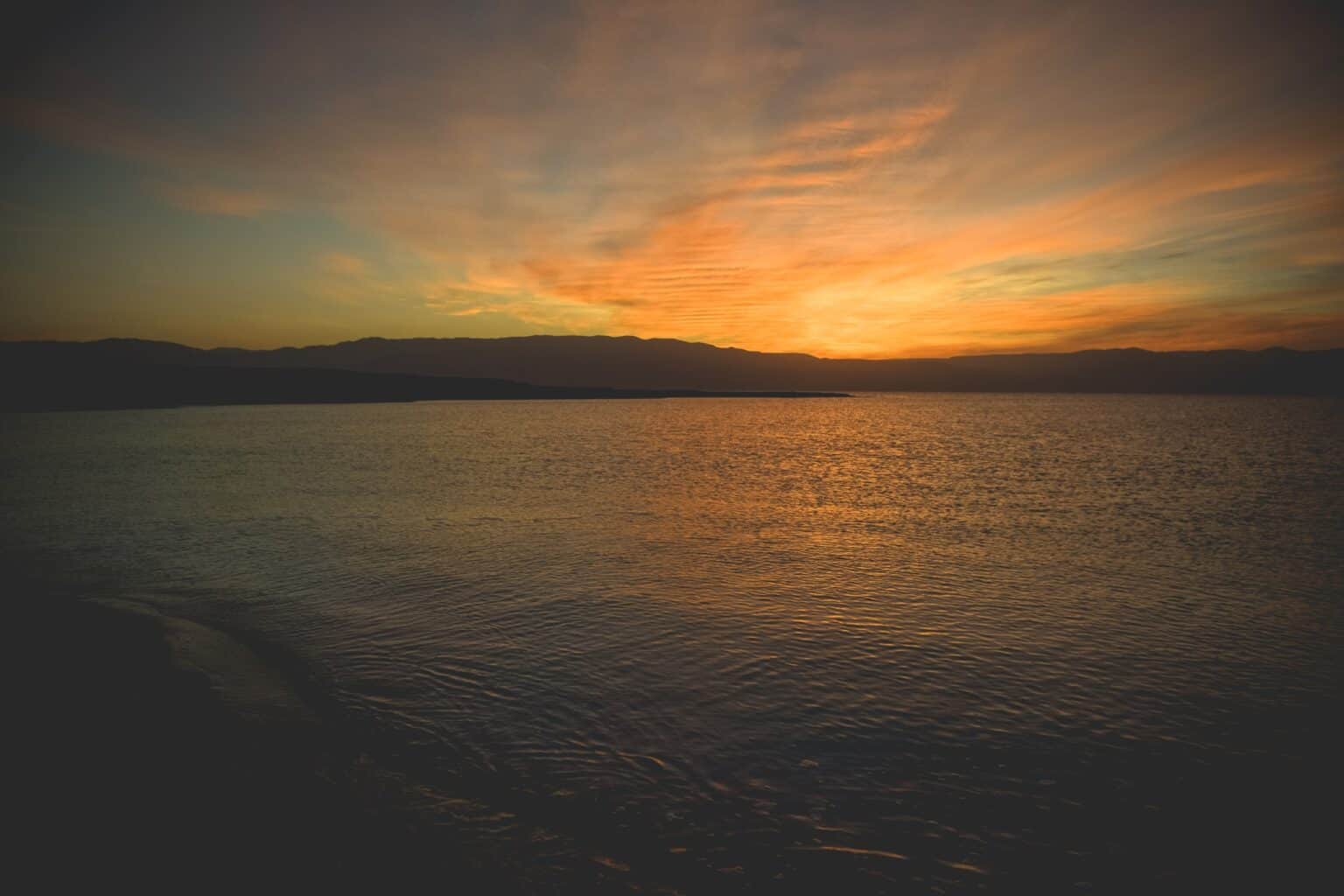
Water brings dissolved salts into the Dead Sea. With no natural outlet to the ocean, water leaves mainly through evaporation, while salts become concentrated in the basin.
About 34 percent is a useful rounded salinity figure, although measurements vary with time, depth and location. Dissolved salts increase the water's density. That density is why your body floats higher than it does in fresh water.
That explains the easy float, not an exemption from water safety. People can still lose control or turn face down. Read the floating rules before entering the water.
Dead Sea salinity explained Why you float in the Dead SeaSalt-adapted microorganisms, including archaea and bacteria, have been studied in the Dead Sea. Fish and the familiar community of plants and animals found in freshwater lakes cannot thrive in this concentrated brine.
“Life” is therefore a question of scale and habitat. The open lake, a freshwater spring and the surrounding desert do not support the same organisms. Observations from one should not be used as a census of another.
What lives in the Dead SeaThe Dead Sea has a place in biblical geography and in the history of the communities that lived around it. Its salt, desert setting and neighbouring settlements recur in accounts of the region. Reading those traditions alongside archaeology helps distinguish a text's story from evidence about a particular site.
The Dead Sea Scrolls are ancient Jewish manuscripts discovered in caves near the lake, including biblical texts, prayers and writings about community life. The name connects them with the region where they were found; they were not recovered from the water.
They are not a single book. Their different texts open a window onto religious life and the transmission of writings in antiquity. The Scrolls and the Dead Sea's biblical history are related subjects, each with its own questions and evidence.
Explore the ScrollsThe Dead Sea's water level has declined over decades. Changes in freshwater reaching the basin, evaporation and industrial activity are part of the environmental story. As the shoreline retreats, land once covered by water becomes exposed.
The consequences are practical as well as visual. Old shore paths and access points do not necessarily describe today's conditions, and sinkholes affect parts of the surrounding ground. Use managed visitor areas and current access information instead of treating every visible stretch of shore as a beach.
For understanding change, a dated water-level record is more useful than an undated “current” number. For a visit, the condition of the actual access point matters more than a general photograph of the lake.
Understand the changing environmentIsrael and Jordan both offer ways to experience the Dead Sea. The useful first choice is where you are travelling, followed by whether you want a beach visit, a day pass or an overnight stay. There is no need to cross a border simply to float.
Keep your transport, beach and accommodation choices within the Israel travel guides. Compare the facilities at the bathing area with what your day requires.
Plan from IsraelKeep your transport, beach and accommodation choices within the Jordan travel guides. Compare a managed beach visit with the inclusions of a resort day pass.
Plan from JordanA beach day and a hotel stay solve different needs. An overnight base gives you more time at the shore; a shorter visit leaves more of the trip for other places. In either case, confirm the specific access arrangements before setting out, especially when you are not staying at the property.
Compare the two travel experiencesThe Dead Sea is an inland salt lake. It has no natural outlet to the ocean. Its familiar name does not change that geographic classification.
A slow, controlled back float is the appropriate approach. Ordinary swimming strokes splash concentrated brine toward your face. Use an open, supervised bathing area, follow the lifeguard and read the floating rules before entering.
A day visit is possible through suitable managed beaches or day-access venues. A hotel room is not the only route to the water. Compare beaches in Israel or day-access options in Jordan, then confirm the exact venue's current arrangements.
Plan access separately for each venue and country. Israel and Jordan have distinct travel and entry systems; a beach or resort admission does not provide border entry or access to an unrelated venue.
The Dead Sea Scrolls are a collection of ancient manuscripts. They include biblical texts and other religious writings. Explore the Dead Sea Scrolls guide for the collection and its history.
No. Use an open, supervised bathing area and stay within its marked zone. Informal shorelines can have unstable ground, sinkholes or difficult entries without immediate help.
Search the DeadSea.com article library for your next question.