By DeadSea.com Editorial
Last reviewed: September 2026
Sodom and Gomorrah are biblical cities associated with the Jordan plain and the Salt Sea, but no archaeological site has been confirmed as either city.
The text gives no modern coordinates, and several ancient settlements around the southern and eastern Dead Sea remain proposals rather than proven identifications.
That distinction matters. The biblical account, the archaeological sites and later local traditions can all be explored, but they are not the same kind of evidence. Our guide to the Dead Sea in the Bible explains the wider textual setting.
The historical timeline places the proposed sites in their separate periods.
What Genesis says about Sodom and Gomorrah
Sodom and Gomorrah appear repeatedly in Genesis. The cities are named in the regional account in Genesis 10, in the account of Abram and Lot in Genesis 13, and in the battle narrative in Genesis 14. The destruction narrative is told in Genesis 18 and 19.
In that narrative, Lot lives in Sodom. Two visitors arrive, Lot receives them into his house, and a violent crowd gathers outside. Lot and members of his family are told to leave. Sodom and Gomorrah are then destroyed by sulfur and fire; Lot’s wife looks back and becomes a pillar of salt.
Genesis 14 connects the Valley of Siddim with the Salt Sea; that is the clearest biblical link between the text and the Dead Sea region. It narrows the geographical setting, but it does not settle where either city stood.
The account later became a reference point in Jewish and Christian scripture, and Lot also appears in the Quran. The religious meaning developed across traditions, while the question of a physical location remained open.
Have archaeologists found the cities?
No archaeological site is accepted as a confirmed identification of Sodom or Gomorrah; several proposals have attracted attention because of their location, period, destruction layers, or relationship to ancient routes. Those features can make a site relevant to the discussion without proving its biblical name.
Bab edh-Dhra and Numeira are two Early Bronze Age settlements on the Jordanian side of the southern Dead Sea region. Excavations established that they were real ancient communities and documented destruction and abandonment; researchers have debated whether they belong in the Sodom and Gomorrah discussion, but the excavated remains do not carry an inscription that identifies either settlement as one of the biblical cities.
Tall el-Hammam, farther north in Jordan, has also been proposed as Sodom. A 2021 paper argued that an airburst destroyed the settlement. The journal retracted that paper on April 24, 2025 after published critiques identified errors in its methodology, analyses, and interpretation. The editors concluded that the airburst claim was not sufficiently supported by the paper’s data. The retracted study should not be used as scientific proof of an airburst or as confirmation that Tall el-Hammam was Sodom.
Archaeology can establish a settlement’s age, buildings, burials, trade connections, and evidence of damage. Connecting that evidence to a named city in an ancient text normally requires a stronger bridge, such as an inscription or a secure historical chain. That bridge has not been found here.
What Mount Sodom does and does not prove
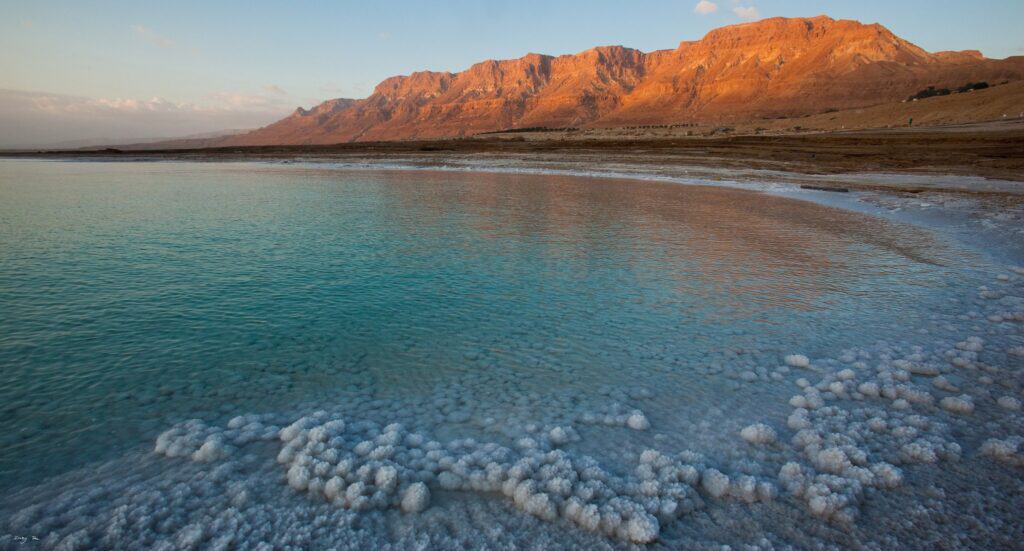
Mount Sodom is a salt formation on the Israeli side of the southern Dead Sea; erosion has shaped pillars and caves in its exposed salt. One pillar is traditionally called Lot’s Wife because its form recalls the Genesis narrative.
The place name and the pillar are part of the region’s living tradition. They are not archaeological evidence for the location of Sodom, and the pillar is a natural geological feature rather than a human figure preserved in salt. Visitors interested in the landscape should treat Mount Sodom as a geological destination with a biblical association.
Do not enter Mount Sodom’s salt caves without an appropriate guide; salt caves can be unstable, and some routes require specialist knowledge and equipment. Read the current Mount Sodom guide before planning a hike.
How to explore the evidence around the Dead Sea
There is no single attraction where a visitor can see the proven ruins of Sodom and Gomorrah. A better approach is to separate the places by country and by the type of evidence they offer.
In Israel, Mount Sodom presents the salt geology and the Lot’s Wife tradition; Qumran belongs to a much later period and has no direct connection to Sodom, but its excavated remains and nearby manuscript caves show how physical evidence can illuminate the region’s history. Our Qumran guide and Dead Sea Scrolls overview explain that evidence.
In Jordan, Bab edh-Dhra and Numeira belong to the archaeological debate about the Cities of the Plain. Farther south, the Byzantine Sanctuary of Agios Lot above Safi preserves a later pilgrimage tradition connected with Lot. Its excavated church, monastery, and cave document centuries of veneration, but they do not establish that this was the refuge described in Genesis. See the separate Lot’s Cave and Safi guide for its heritage context.
Keeping these places separate makes the journey more rewarding. Genesis supplies the narrative. Archaeology supplies evidence about ancient settlements, geology explains Mount Sodom’s salt landscape, and later sanctuaries and place names show how communities remembered the account.
For the wider physical context, continue with 10 Dead Sea facts.
The guide to why the Dead Sea is so salty explains the basin’s unusual water chemistry.
Frequently asked questions
Where were Sodom and Gomorrah?
Genesis connects the cities with the Jordan plain and the Salt Sea, the ancient name associated with the Dead Sea. Several sites in Jordan have been proposed, especially around the southern and eastern shore, but no location has been conclusively identified as either city.
Are Bab edh-Dhra and Numeira Sodom and Gomorrah?
They are excavated Early Bronze Age settlements in the southern Dead Sea region. Their age, location, and destruction have made them part of the debate, but archaeology has not produced an inscription or other decisive evidence naming them as Sodom and Gomorrah.
Did an airburst destroy Tall el-Hammam?
A 2021 paper proposed an airburst explanation, but the journal retracted the paper in April 2025 after finding that its conclusions were not reliably supported, a warning against treating the claim as settled. It does not prove an airburst or Tall el-Hammam’s biblical identity.
Is the pillar called Lot’s Wife a real person turned to salt?
The pillar at Mount Sodom is a natural salt formation shaped by geological processes and erosion; its name reflects a local tradition tied to Genesis 19. It is not archaeological evidence that a person became salt. The traditional name records how people interpreted the landscape, not physical proof of the narrative.
Can I visit Sodom and Gomorrah today?
No confirmed site bears either name. You can visit places associated with the biblical account or the debate, including Mount Sodom in Israel and the Sanctuary of Agios Lot in Jordan. Plan each country as a separate trip and check the relevant destination guide before travel.