Overview
By DeadSea.com Editorial
Last reviewed: September 2026
Dead Sea climatotherapy is a structured treatment stay combining controlled sun exposure with the region’s climate and, often, mineral bathing. The strongest evidence is for psoriasis rather than general wellness, and it comes from repeated programs with defined clinical outcomes. A beach holiday is not the same intervention. Read the broader Dead Sea health evidence before deciding whether you need a clinic, spa or safe vacation.
What happens during Dead Sea climatotherapy?
Programs vary, but medical climatotherapy is usually built around an individualized schedule; a clinician may assess the skin, review medication and photosensitivity, increase sun exposure gradually, and coordinate bathing. The details matter because ultraviolet radiation can improve psoriasis while also causing burns and cumulative skin damage.
This is why the word “climate” should not be read as a claim that the air itself heals. Studies usually evaluate the complete stay. They cannot assign the outcome to oxygen density, atmospheric bromine, rest, sunshine, or Dead Sea water one by one.
In Emmanuel’s 2020 cohort, 18 people with psoriasis completed an individualized four-week program in Ein Gedi; mean PASI fell by 88 percent, but visible symptoms returned after a mean of 93.8 days. The study supports a short-term combined program; it does not show permanent control or isolate one natural factor.
What does the psoriasis evidence show?
Psoriasis has the most substantial Dead Sea climatotherapy literature. The 2020 prospective cohort found large short-term improvements in clinical scores and quality of life after four weeks. A related 2022 study examined skin samples from the same group and found that most measured inflammatory and cellular markers decreased after treatment, then returned toward baseline at relapse. Both studies were small and had no untreated comparison group.
An older comparative study helps separate water from sun; eighty-one people with psoriasis completed four weeks at the Dead Sea, and average PASI improvement was 28 percent with bathing alone, 73 percent with sun exposure alone, and 83 percent with both. Those results make controlled ultraviolet exposure central to the program, while suggesting that bathing may add something. Our dedicated psoriasis guide and dermatology research review examine the evidence in more detail.
Even-Paz and colleagues compared 81 patients over four weeks: average PASI improvement was 28 percent with Dead Sea water, 73 percent with sun, and 83 percent with both. The comparison suggests that sunlight was the main contributor in that program, so bathing alone should not inherit the combined result.
The psoriasis literature is encouraging, but it does not justify “cure” language. Individual response and relapse time vary. A 2024 narrative review summarized decades of clinical studies, yet many were observational, performed at treatment centers, or based on protocols that differ by duration and season.
What about eczema and other conditions?
Evidence for atopic dermatitis exists, but it is less straightforward. A large uncontrolled outpatient study tested narrowband UVB plus Dead Sea salt bathing rather than natural on-site climatotherapy. Participants completed up to 35 sessions; skin scores improved, but nearly half did not complete all sessions. Burning from the salt solution and redness were reported. A retrospective Dead Sea study also described improvement, but the multi-component program and its design limit causal conclusions. See our eczema evidence page.
Research on joint and rheumatologic conditions is smaller and more heterogeneous. A 2026 systematic review included nine studies with 465 participants across marine and Dead Sea environments; it found possible short-term benefits for pain, function, and quality of life, but pooled pain analysis was limited and statistically inconclusive. That is a reason for careful expectation setting, not for dismissing every patient report.
How is a clinical program different from a spa stay?
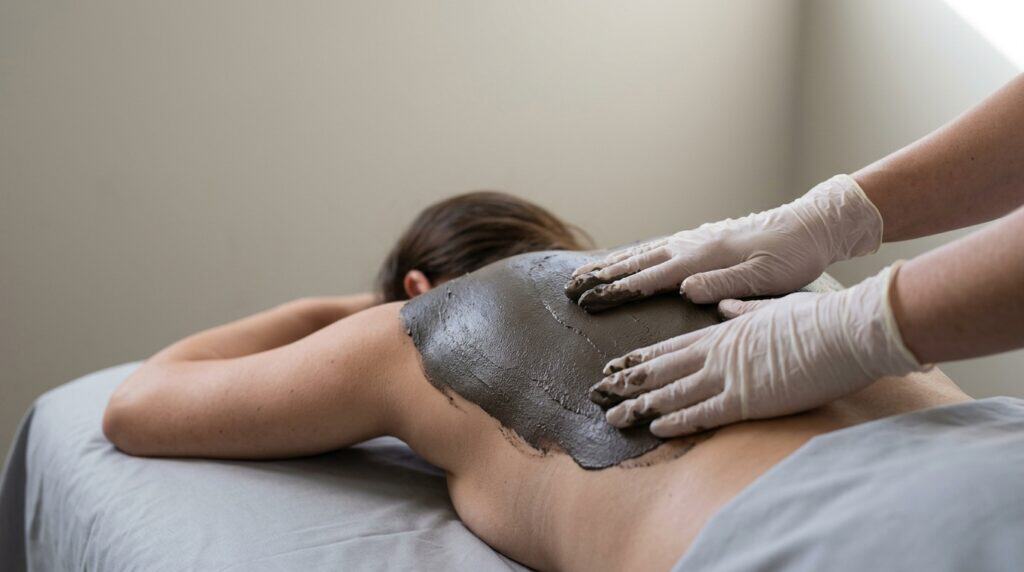
A hotel spa may offer bathing, mud, massage, and rest. Those can be enjoyable, but they do not automatically include diagnosis, ultraviolet dosing, outcome measurement, or a plan for adverse effects. Our spa versus clinic comparison explains the practical difference.
If the purpose of your trip is treatment, ask who designs the schedule, who checks your skin, how medications are reviewed, and what happens if you burn or flare. Compare Dead Sea treatment packages on those points rather than on the number of spa services. Arrange transport, accommodation and insurance around the resulting clinical schedule.
How should you plan safely?
Start with the clinician who already knows your condition. Provide your medication list, including topical products and supplements, because some drugs and skin treatments can increase photosensitivity. Our medication and floating guide gives you questions to bring to that conversation.
Heat and dehydration still matter during a health-focused visit. A supervised sun plan does not remove ordinary desert risks, and the local ultraviolet pattern does not make unlimited exposure safe. Follow Dead Sea heat-safety guidance and do not copy another patient’s schedule.
A visitor who wants to float, enjoy mud, and relax does not need to frame the day as climatotherapy. That distinction protects both travelers and the research. Clinical evidence remains meaningful when it stays attached to the program actually studied.
Sources
- Emmanuel et al., 2020, prospective psoriasis cohort, DOI 10.3389/fmed.2020.00083.
- Emmanuel et al., 2022, immunohistochemical follow-up, DOI 10.1111/exd.14549.
- Even-Paz et al., 1996, sun versus water comparison, DOI 10.3109/09546639609089534.
- Schiffner et al., 2002, uncontrolled outpatient atopic dermatitis study, PMID 12459524.
- Harari, 2024, narrative review of psoriasis studies, PMID 38493334.
- Muller et al., 2026, systematic review of musculoskeletal and rheumatologic programs, PMID 42489765, DOI 10.1007/s00484-026-03279-1.
Frequently asked questions
Is Dead Sea climatotherapy just a sunny vacation?
No. Medical climatotherapy uses a structured, often individualized program with controlled ultraviolet exposure and usually bathing. A vacation may include the same landscape, but it lacks the defined dose, supervision, and outcome tracking used in research. The difference matters when you interpret clinical percentages.
How long does Dead Sea climatotherapy take?
Study programs range from about two weeks to four weeks, while outpatient simulations have used up to 35 sessions. That describes research schedules, not a universal prescription. The right duration depends on the condition, skin type, medication, response, and medical plan.
Does Dead Sea climatotherapy cure psoriasis?
No. It can produce substantial short-term improvement in some patients, but relapse remains possible. In the 2020 cohort, visible symptoms returned after a mean of 93.8 days, with a range from 31 to 219 days, and the authors did not observe long-term disease control.
Is Dead Sea sunlight automatically safer than sunlight elsewhere?
No sunlight is risk free. Atmospheric and ultraviolet measurements show that the spectrum and dose pattern in the basin differ from higher elevations, which can support carefully managed exposure; that does not remove sunburn, photoaging, or skin-cancer risk, so medical programs still use graduated schedules.
Can I stop my medication during a climatotherapy trip?
Do not stop or change prescribed treatment without the clinician responsible for your care; some studies examined climatotherapy as a treatment program, but they do not create a personal medication plan. A review is especially important when a drug or topical product changes sun sensitivity.
Medical disclaimer
This article summarizes research for education and travel planning. It is not a diagnosis, treatment plan, ultraviolet-exposure schedule, or recommendation to change medication. Discuss a health-focused Dead Sea stay with a qualified clinician who can assess your condition and personal risks.