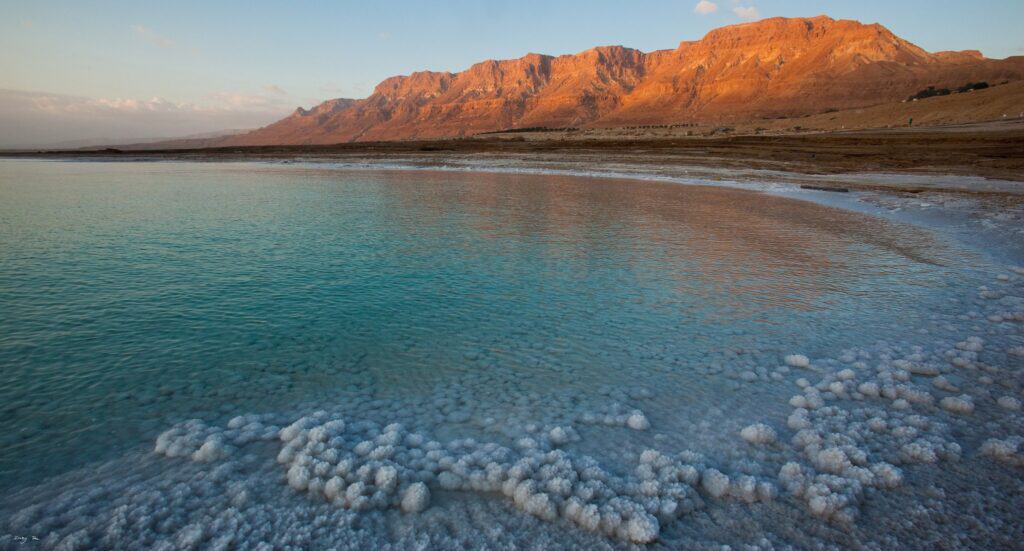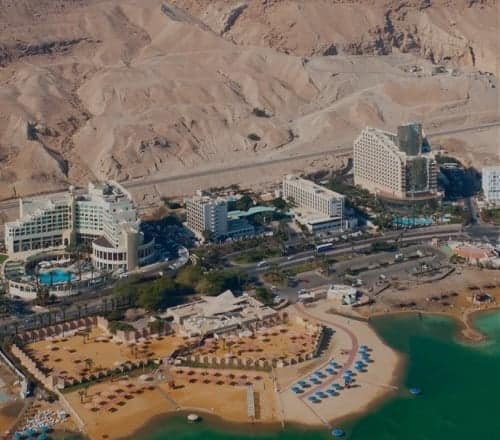
Sodom and Gomorrah are among the most recognized place names in the Hebrew Bible, paired with Admah, Zeboiim, and Zoar in the so-called Cities of the Plain. Their destruction by sulfur and fire is described in Genesis 19. The cities have shaped religious teaching, literature, and language for millennia, and their geographic association with the Dead Sea region has drawn pilgrims, travelers, and archaeologists for centuries. Modern scholarship offers possible site identifications without consensus, alongside a salt landscape on the southwestern shore that bears the name Mount Sodom and contains the famous rock-salt pillar known as Lot’s wife.
Sodom and Gomorrah, paired cities in Genesis 18 and 19 destroyed by sulfur and fire, have been linked archaeologically to several Early and Middle Bronze Age sites near the Dead Sea, but no identification commands consensus. Bab edh-Dhra, Numeira, and Tall el-Hammam are the leading candidates, and the geological feature called Mount Sodom on the southwestern shore preserves the place name in the modern landscape.
The Biblical Account
Genesis 18 to 19, the narrative
In the Genesis text, three visitors approach Abraham at Mamre and announce that the cities of Sodom and Gomorrah will be judged for their wickedness. Abraham negotiates with God, who agrees to spare the cities if ten righteous people are found. Two of the visitors, presented as angels, continue to Sodom, where they are received by Lot, Abraham’s nephew. The men of the city demand that the visitors be handed over. The visitors warn Lot to flee with his family. As the family escapes, the cities are destroyed by sulfur and fire. Lot’s wife looks back and is turned into a pillar of salt.
The Cities of the Plain
Sodom and Gomorrah are paired in Genesis with three other cities, Admah, Zeboiim, and Zoar, sometimes grouped as the Cities of the Plain. Genesis 14 describes a war involving these cities and the Vale of Siddim, said to be full of bitumen pits. Bitumen, a naturally occurring asphalt, has long been associated with the Dead Sea, where it surfaces from the lake bed and was traded across the ancient Mediterranean. Whether the Vale of Siddim is identifiable with any specific modern location remains an open question.
Reception across traditions
The Sodom narrative appears in the New Testament (Luke 17:32, 2 Peter 2:6, Jude 7) as a moral and eschatological reference. The Quran tells a closely parallel story in Surah Hud and Surah al-Hijr, where the prophet Lut warns his people. Across Jewish, Christian, and Islamic traditions, Sodom has functioned as a paradigm of divine judgment regardless of differences in interpretation.
Where Were Sodom and Gomorrah?
The biblical text places the cities in the plain associated with the Dead Sea, but does not give modern coordinates. Three lines of investigation dominate the archaeological discussion.
1. Bab edh-Dhra and Numeira (southeastern Dead Sea, Jordan)
Bab edh-Dhra and Numeira are Early Bronze Age sites located on the eastern side of the southern Dead Sea, in the Lisan plain region of Jordan. Excavations led by Walter Rast and Thomas Schaub from the 1970s onward documented substantial Early Bronze Age towns with cemeteries, defensive walls, and clear destruction layers including burned roof timbers and ash deposits. The destruction is dated approximately 2350 to 2300 BCE, near the end of the Early Bronze Age. The sites are sometimes proposed as Sodom and Gomorrah, with Bab edh-Dhra often associated with Sodom and Numeira with Gomorrah, though this identification is also debated.
2. Tall el-Hammam (northern Dead Sea, Jordan Valley)
Tall el-Hammam is a large multi-period site in the southern Jordan Valley, north of the Dead Sea, excavated since 2005 by Steven Collins of Trinity Southwest University. The excavation team has consistently proposed identification with Sodom based on Middle Bronze Age destruction layers and geographic readings of Genesis. This identification is rejected by most mainstream archaeologists, who locate the biblical Cities of the Plain to the south of the Dead Sea, consistent with Genesis 14 and the Bab edh-Dhra and Numeira evidence.
3. The Tall el-Hammam airburst paper, an important caution
In September 2021, a paper in Scientific Reports proposed that a Tunguska-scale cosmic airburst around 1650 BCE destroyed Tall el-Hammam and that the event might be the historical basis for the Genesis Sodom narrative. The paper drew significant media coverage. It also drew sustained scientific criticism. On 24 April 2025, Scientific Reports formally retracted the paper, citing methodological errors, problematic mineralogical and geochemical interpretation, and unsupported comparisons with the 1908 Tunguska event. The retraction does not settle the question of Tall el-Hammam’s identity, but it removes the airburst hypothesis from the peer-reviewed literature. Eleven of the twenty-one authors disagreed with the retraction.
The 2021 Scientific Reports paper claiming a cosmic airburst destroyed Tall el-Hammam and inspired the Sodom narrative was formally retracted on 24 April 2025 after editors concluded that its mineralogical evidence and Tunguska comparisons were not sufficiently supported. The site itself remains under excavation, but the airburst hypothesis is no longer part of the peer-reviewed record.
4. The minimalist position
A separate scholarly position holds that Sodom and Gomorrah may be entirely literary cities, archetypes constructed for moral and theological purposes rather than memories of specific destroyed towns. On this reading, salt landscapes, sulfur deposits, bitumen seeps, and earthquake activity in the Dead Sea region provided ample environmental material for a powerful narrative without requiring a specific historical destruction event.
Mount Sodom, the Salt Mountain
Mount Sodom (Hebrew: Har Sedom) is a geological feature on the southwestern shore of the Dead Sea, in Israel. It is a salt diapir, a mass of rock salt forced upward through overlying sediments by tectonic and gravitational pressure. The mountain is approximately 11 kilometers long, up to 5 kilometers wide, with a peak roughly 220 meters above the current Dead Sea surface. It is composed of around 80 percent halite, capped by a thinner layer of limestone, clay, and conglomerate.
Mount Sodom continues to rise at a rate of approximately 3.5 millimeters per year, balanced against rapid surface erosion by the rare but intense flash floods that cut its flanks. The mountain contains an extensive system of salt caves, including some of the longest known in the world, formed by water dissolving the salt body from below.
Lot’s wife pillar
On the eastern slope of Mount Sodom, a natural rock-salt column approximately 20 meters tall is identified by tradition as the pillar of salt described in Genesis 19:26. The pillar is a transient geological feature, reshaped continuously by erosion. The column visited by travelers today is not the same column visited centuries ago. The mountain self-sculpts on a timescale shorter than human memory, and successive generations have identified the pillar with whatever salt formation most resembled a human figure at that time.
In Jewish tradition, two blessings are associated with seeing the pillar, acknowledging divine justice and the merit of Abraham. The site is accessible from Route 90 along the western Dead Sea shore.
What to See on the Ground Today
| Site | Location | What you can see |
|---|---|---|
| Mount Sodom and Lot's wife pillar | Western shore, Israel, off Route 90 | Salt diapir, salt caves, rock-salt pillar, hiking trails (Fish Trail, Mount Sodom hike) |
| Bab edh-Dhra | Eastern shore, Jordan, near Lisan | Early Bronze Age tell, cemetery, partial reconstructions, no on-site museum |
| Numeira | Eastern shore, Jordan, south of Bab edh-Dhra | Early Bronze Age tell, accessible from the Dead Sea Highway |
| Tall el-Hammam | Southern Jordan Valley, Jordan, near the Jordan River | Large multi-period tell, ongoing excavation, no public visitor center as of 2026 (NEEDS VERIFICATION) |
| Cave of Lot, Deir 'Ain Abata | Eastern shore, Jordan, near Safi | Byzantine monastery and cave traditionally identified with Lot's refuge after Sodom |
How Geology Becomes Story
The Dead Sea region offers a near-complete vocabulary for the Genesis 19 narrative. Sulfur deposits exist across the surrounding hills. Bitumen seeps from the lake bed. Earthquakes occur regularly along the Dead Sea Transform. Asphalt-bearing layers ignite under heat. Salt pillars erode into human-shaped silhouettes. Whether these geological features inspired the narrative, are described by it, or simply share the same landscape, the cumulative effect is unmistakable: the destruction account fits the place, and the place keeps producing new examples of the elements the account names.
The Dead Sea region supplies every physical element the Genesis 19 destruction narrative names: sulfur deposits, asphalt seeps, salt pillars, and an active earthquake fault along the Dead Sea Transform. Whether geology inspired the story or was reinterpreted through it, the landscape continues to produce the elements the account describes, which is part of why the narrative has held cultural force for more than three thousand years.
FAQs
Where were Sodom and Gomorrah located?
The biblical text places Sodom and Gomorrah in the plain associated with the Dead Sea, but no archaeological site is universally identified as Sodom. Leading candidates include Bab edh-Dhra and Numeira on the southeastern shore in Jordan, and Tall el-Hammam in the southern Jordan Valley. The Bab edh-Dhra and Numeira identifications are more widely accepted in mainstream archaeology.
Has Sodom been found?
No site has been confirmed as biblical Sodom. Bab edh-Dhra and Numeira show Early Bronze Age destruction layers and are the most widely accepted candidates. Tall el-Hammam is proposed by its excavator but the identification is contested. A 2021 paper claiming a cosmic airburst destroyed Tall el-Hammam and inspired the Sodom narrative was retracted in April 2025.
What was the Tall el-Hammam airburst paper?
The Tall el-Hammam airburst paper was a 2021 article in Scientific Reports arguing that a Tunguska-scale cosmic airburst destroyed the city around 1650 BCE and may have inspired the biblical Sodom story. After multiple peer critiques of its mineralogical evidence and Tunguska comparisons, the journal retracted the paper on 24 April 2025.
Is the Lot's wife pillar real?
The Lot’s wife pillar is a real geological formation, a natural rock-salt column approximately 20 meters high on Mount Sodom in Israel. It is not a human-made statue or an archaeological artifact. The pillar is also continuously reshaped by erosion, so the column shown to visitors today is not identical to the formation seen by earlier generations of pilgrims.
Why is Mount Sodom called Mount Sodom?
Mount Sodom takes its name from the biblical city of Sodom, traditionally associated with the southern Dead Sea region. The mountain itself is a geological salt diapir, a mass of rock salt pushed upward through overlying sediment. It is approximately 80 percent halite, 11 kilometers long, and rises around 220 meters above the southern Dead Sea.
Are Sodom and Gomorrah in the Quran?
Yes. The cities, called the people of Lut, appear in several Quranic chapters including Surah Hud and Surah al-Hijr. The Quranic narrative parallels the Genesis account in its main outline, with the prophet Lut warning his people, the destruction of the cities, and the salvation of Lut and his family except his wife.
Can I visit the sites today?
You can visit Mount Sodom and the Lot’s wife pillar on the western Dead Sea shore in Israel, accessible from Route 90 with several marked hiking trails. Bab edh-Dhra, Numeira, and the Cave of Lot at Deir ‘Ain Abata are accessible from the Dead Sea Highway in Jordan. Tall el-Hammam is an active excavation, with public access details that you should verify locally before visiting (NEEDS VERIFICATION).