Overview
By DeadSea.com Editorial
Last reviewed: September 2026
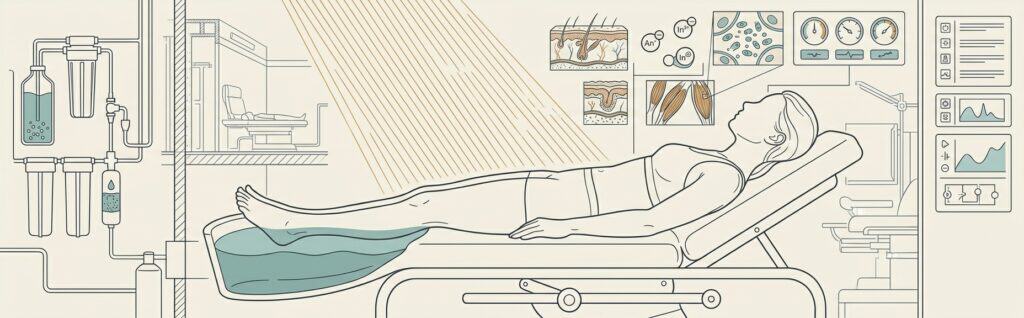
No clinical study identified in this review has tested Dead Sea floating, brine exposure, or mud use during pregnancy. That means there is no evidence-based universal soak time, trimester ban, or mineral protocol for pregnant visitors. The best-supported concerns are heat, dehydration, balance, sun exposure, and the person’s own pregnancy risks.
A Dead Sea visit may still be possible for someone with an uncomplicated pregnancy, but clearance has to come from the clinician who knows the pregnancy and the exact plan. A managed beach with shade, freshwater, an easy exit, and active staff is a different decision from an unsupervised shoreline stop in extreme heat.
What is known, and what is not?
The research gap is specific. General pregnancy studies examine hot weather, exercise, hot baths, or saunas. They do not recreate concentrated Dead Sea brine, outdoor desert heat, a sloping entry, and the changed balance of floating.
A 2019 systematic review included 12 studies and 347 pregnant participants exposed to exercise or passive heat under defined conditions. No participant exceeded a core temperature of 39.0 C, and the authors identified controlled combinations that remained below that threshold.[1] Those results are reassuring about the tested conditions, but they do not create a Dead Sea clearance or a universal visit duration.
The newer evidence also warns against casual reassurance. A 2026 systematic review and meta-analysis found consistent acute physiological responses to heat across 27 studies, including increases in maternal core temperature and heart rate, with greater concern in participants with hypertension or pre-eclampsia.[2]
Pregnancy evidence supports managing heat and individual risk. It does not support a made-up Dead Sea time limit or a blanket mineral warning.
Heat is the main environmental question
The CDC states that heat can affect pregnancy in any trimester and recommends an individualized heat-action plan.[3] ACOG advises hydration and avoiding high heat and humidity during exercise, particularly in the first trimester, and separately advises against early-pregnancy sauna and hot-tub use because those activities raise core temperature.[4,5]
Dead Sea water is not automatically a hot tub. Water temperature, air temperature, sun, humidity, time of day, and individual health all change the heat load. This is why a fixed “10 to 15 minutes” rule is not a medical clearance and why a whole-season prohibition is too blunt.
Check the current forecast and use the Dead Sea heat-safety guide. If the conditions do not allow a comfortable shaded visit with easy cooling and hydration, change the plan rather than trying to complete a float.
A safer way to plan the visit
Before booking, ask the pregnancy clinician about the whole itinerary: flight or road time, walking, heat, floating, medication, and access to care. If the clinician agrees that the trip is reasonable:
- Choose a managed beach or resort with active lifeguard service, stable handrails or assisted entry, nearby freshwater showers, shade, seating, and an air-conditioned space.
- Go with another adult who can stay close during entry and exit. Pregnancy can change balance, and unusual buoyancy can make the transition less predictable.
- Enter only if you feel well, the current conditions are comfortable, and venue staff have not restricted access.
- Sit before leaning back, keep your face dry, avoid splashing, and leave at the first sign of dizziness, weakness, nausea, unusual heat, pain, bleeding, contractions, reduced fetal movement, or any symptom your clinician has told you to treat as urgent.
- Rinse with fresh water, move into shade or cooling, and reassess how you feel before adding another activity.
The Dead Sea swimming rules explain the controlled entry and exit sequence. They do not replace pregnancy-specific medical advice.
What about Dead Sea minerals and mud?
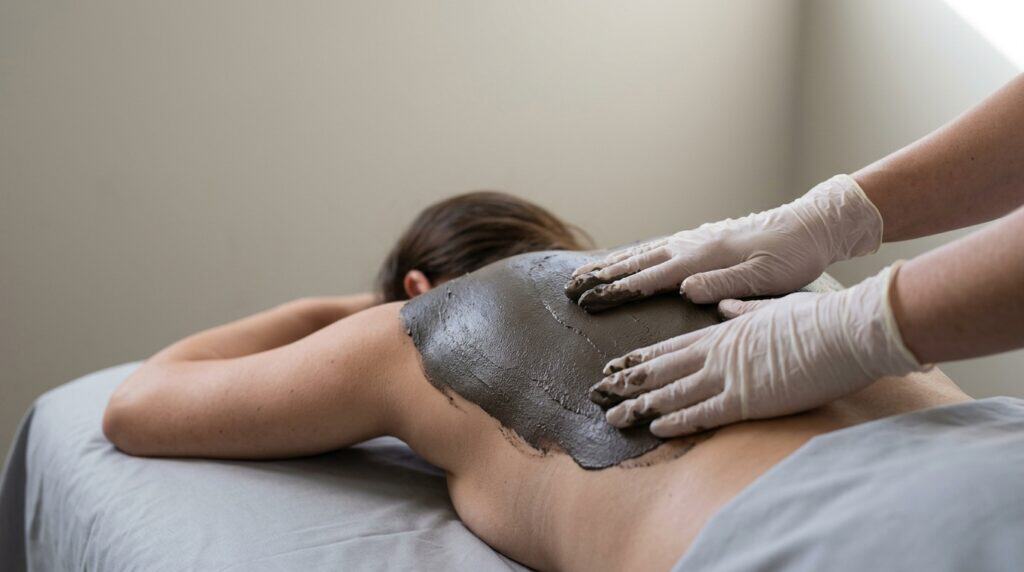
No pregnancy study identified here establishes either benefit or harm from Dead Sea minerals applied to intact skin. The existing page’s concern about unstudied “transdermal mineral absorption” should not be presented as the proven central risk. Exposure studies in other populations do not establish a pregnancy outcome.
There is also no evidence-based pregnancy mud protocol. If the clinician has not advised against cosmetic use, keep any product label-directed, brief, and on intact skin, without heat wraps or a treatment claim. Skip it if the formula is unfamiliar, the skin is irritated, or the setting makes cooling difficult.
When the answer should be “not today”
Do not use a travel article to override a clinician’s restriction, a complicated pregnancy, active symptoms, or a heat warning. The CDC notes that nausea, vomiting, and diarrhea deserve particular attention because heat can compound fluid and electrolyte imbalance.[3]
Skipping the float does not mean skipping the Dead Sea. A shaded viewpoint, an indoor spa area without heat exposure, or a brief scenic stop can preserve the trip without forcing a water activity.
Sources
- Ravanelli N, et al. Heat stress and fetal risk: environmental limits for exercise and passive heat stress during pregnancy. 2019. DOI 10.1136/bjsports-2017-097914.
- Bonell A, et al. Physiological and biological response to heat exposure in pregnancy. Lancet Planetary Health. 2026. DOI 10.1016/j.lanplh.2026.101431.
- United States Centers for Disease Control and Prevention. Clinical Overview of Heat and Pregnancy. Updated 18 September 2025.
- American College of Obstetricians and Gynecologists. Physical Activity and Exercise During Pregnancy and the Postpartum Period. 2020.
- American College of Obstetricians and Gynecologists. Can I use a sauna or hot tub early in pregnancy? Reviewed September 2021.
- Nyadanu SD, et al. Maternal exposure to ambient air temperature and adverse birth outcomes. 2024. DOI 10.1016/j.scitotenv.2024.170236.
- World Health Organization Regional Office for Europe. How does hot weather affect pregnancy? Updated 2024.
Frequently asked questions
Can pregnant women float in the Dead Sea?
There is no direct clinical study that creates a universal yes or no. A clinician should consider the pregnancy, current symptoms, heat, access, balance, medication, and planned activity before the visit.
Is there a safe number of minutes?
No evidence-based universal Dead Sea duration was identified. Follow the clinician’s advice, current venue rules, conditions, and your body’s stop signals. Leave sooner if anything feels wrong.
Should the Dead Sea be avoided in the first trimester?
General guidance is especially cautious about overheating early in pregnancy, but no study establishes a blanket Dead Sea trimester ban. The personal decision belongs with the pregnancy clinician.
Are Dead Sea minerals absorbed into the baby?
The reviewed evidence does not answer that question. It also does not establish transdermal mineral absorption as the main pregnancy risk from an ordinary float. Heat and individual obstetric factors have clearer support.
Can I use Dead Sea mud while pregnant?
No pregnancy-specific mud trial or validated protocol was identified. Ask the pregnancy clinician about the exact product and setting, avoid heat wraps and irritated skin, and do not treat mud as a medical therapy.
Medical disclaimer
This article summarizes research for education and travel planning. It is not prenatal care, a fitness-to-travel decision, an immersion prescription, or an emergency guide. Consult the qualified clinician responsible for the pregnancy before planning a Dead Sea float.