The Short Answer
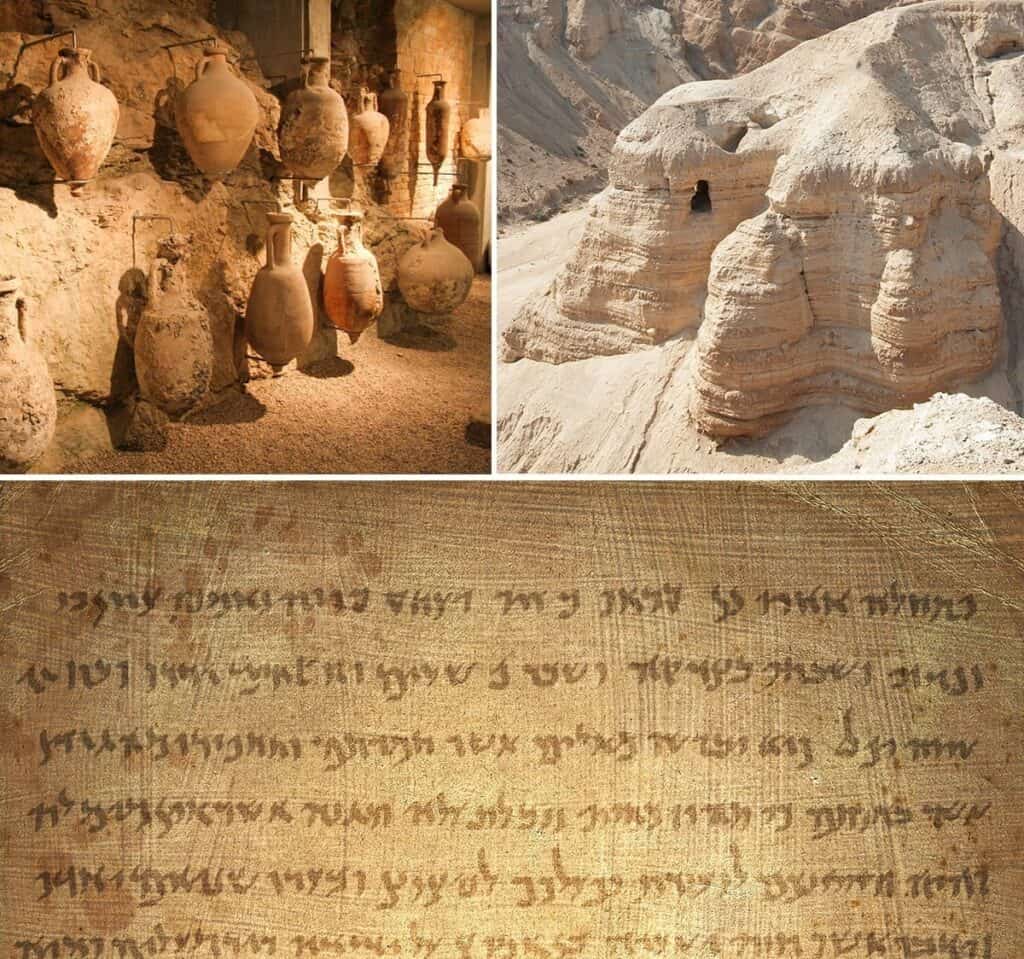
The War Scroll (1QM) is an apocalyptic military text found among the original seven Dead Sea Scrolls discovered in Cave 1 near Qumran in 1947. Written in Hebrew on a 19 column parchment roll dating to approximately the late 1st century BCE, it describes a prophesied 40 year war between the “Sons of Light” and the “Sons of Darkness.” The manuscript combines detailed Roman era military knowledge with theological narrative, making it one of the most distinctive documents in the Dead Sea Scrolls collection.
What the War Scroll Describes
The text opens by identifying the opposing forces. The Sons of Light comprise the tribes of Levi, Judah, and Benjamin, along with the exiled faithful. The Sons of Darkness include the traditional enemies of Israel (Edom, Moab, Ammon, Philistia) allied with the “Kittim,” a term scholars widely interpret as a reference to Rome.
The war unfolds over 40 years in a structured sequence. The initial six-year phase pits the Sons of Light directly against the Kittim and their allies in seven decisive engagements. In three of those battles the Sons of Light prevail, in three the Sons of Darkness prevail, and in the seventh God intervenes to secure final victory. The remaining years extend the conflict outward to distant nations, with sabbatical years of rest incorporated into the timeline to reach the 40-year total.
What makes the War Scroll remarkable is its specificity. The text prescribes exact military formations, specifying cavalry positions, infantry lines, and the ages of soldiers for different roles (men aged 25 to 30 for camp duties and logistical support, 40 to 50 for front-line combat). It details trumpet signals for advance, retreat, and ambush. It describes weapon dimensions, shield sizes, and banner inscriptions.
The War Scroll (1QM) from Qumran describes a prophesied 40 year apocalyptic war in 19 columns of Hebrew text, prescribing exact military formations, trumpet signals, weapon dimensions, and soldier age requirements that reflect detailed knowledge of Roman era military practice combined with the Qumran community's theological worldview.
Military Knowledge and Roman Influence
Yigael Yadin, the Israeli archaeologist who published the definitive study of the War Scroll in 1962, demonstrated that the military formations described in the text closely parallel Roman legionary tactics. The rectangular infantry formations, the use of cavalry on the flanks, the staged advance with javelin volleys followed by close combat, and the trumpet signaling system all reflect knowledge of how Roman armies actually operated.
This Roman military awareness dates the text’s practical content to a period when the Qumran community had direct or indirect familiarity with Roman forces in the region, consistent with the late 1st century BCE dating. The community appears to have believed that the same military techniques Rome used to dominate the world would, under divine direction, be turned against Rome itself.
Yigael Yadin's 1962 analysis demonstrated that the War Scroll's military formations closely parallel Roman legionary tactics, including rectangular infantry blocks, flanking cavalry, staged javelin volleys, and trumpet signaling, suggesting the Qumran community studied Roman military methods in preparation for their prophesied apocalyptic confrontation.
Theological Framework
The War Scroll reflects the dualistic worldview that pervades Qumran sectarian literature. Humanity is divided between the dominion of the Prince of Light (also called Michael) and the Angel of Darkness (Belial). The final war is not merely a military conflict but a cosmic battle in which heavenly forces fight alongside human armies.
Battle prayers occupy significant portions of the text. Before and after each engagement, priests recite liturgical compositions praising God’s power and declaring the enemy’s defeat. These prayers serve a dual function: they frame the military action as worship, and they reassure the community that the outcome is predetermined by divine will.
Where to See the War Scroll
The original War Scroll is displayed at the Shrine of the Book, a wing of the Israel Museum in Jerusalem. The museum sits approximately 90 minutes by car from the Dead Sea’s Ein Bokek hotel zone. Qumran National Park on Route 90, approximately 50 minutes north of Ein Bokek, preserves the site where the scroll was discovered and provides interpretive exhibits about the manuscript collection.
FAQs
What is the Dead Sea War Scroll about?
The War Scroll (1QM) describes a prophesied 40 year apocalyptic war between the “Sons of Light” (the Qumran community and allied Israelite tribes) and the “Sons of Darkness” (identified with Rome and traditional enemies of Israel). It includes detailed military formations, weapon specifications, trumpet signals, and battle prayers.
When was the War Scroll written?
Scholars date the War Scroll to approximately the late 1st century BCE, based on paleographic analysis of the handwriting and internal historical references. The manuscript was discovered in Cave 1 near Qumran in 1947, alongside six other original Dead Sea Scrolls.
Is the War Scroll a real battle plan?
The War Scroll combines practical military knowledge (formations, signals, weapon specifications reflecting Roman tactics) with theological narrative (divine intervention, angelic warfare, cosmic dualism). Scholars interpret it as a prophetic text describing an anticipated future war, not a record of an actual battle.
Who are the Sons of Light and Sons of Darkness?
In the War Scroll’s framework, the Sons of Light are the Qumran community and the tribes of Levi, Judah, and Benjamin. The Sons of Darkness include the Kittim (widely interpreted as Rome), along with Edom, Moab, Ammon, and Philistia. The dualistic division reflects the community’s broader theological worldview found throughout their sectarian literature.
Where is the War Scroll displayed?
The original War Scroll is housed at the Shrine of the Book, a wing of the Israel Museum in Jerusalem. The Shrine of the Book is approximately 90 minutes from the Dead Sea. Qumran National Park, where the scroll was discovered, is approximately 50 minutes north of Ein Bokek on Route 90.