By DeadSea.com Editorial
Last reviewed: September 2026
Most visitors have seen the Dead Sea before they reach it. A floating reader, pale salt at the waterline, desert cliffs, Masada, scroll fragments, and Cleopatra-themed cosmetics repeat across photographs, books, television, advertising, and travel posts.
Some of these images document real physical or historical features. Others compress a complicated place into one memorable scene. Understanding where the familiar motifs came from makes the visit more interesting and helps separate the landscape from the stories placed on it.
The Dead Sea’s public image comes from a small set of recurring motifs: floating, salt, desert, ancient texts, biblical memory, and luxury.
The floating reader appeared earlier than many people think
The standard tourism image shows someone reclining in the water while reading a newspaper. Its exact first appearance is difficult to establish, but the idea is older than the modern newspaper pose.
The Library of Congress holds a photograph dated broadly between 1898 and 1946 in which a man floats with a book and sunshade. The Smithsonian also catalogues a historic stereograph built around the same physical spectacle. These records show that photographers were using buoyancy as a visual demonstration decades ago.
An academic study of nineteenth-century photography identifies the first known Dead Sea photograph in 1857. Early photographers were interested in the lake as geography, biblical landscape, and technical subject. The floating body later supplied a simpler message: this water behaves differently.
The science of floating in the Dead Sea explains how concentrated brine changes buoyancy and body position.
Before entering the water, read how to float safely and follow the instructions at the managed beach you choose.
Exploration, maps, and travel books shaped the Western image
In 1847 and 1848, United States Navy officer William Francis Lynch led an expedition along the Jordan River and Dead Sea. The party recorded routes, depths, and observations, then circulated maps and published accounts. This was an important episode in nineteenth-century Western surveying, though local communities and earlier travellers already knew the region.
Mark Twain arrived in 1867. His account appeared in The Innocents Abroad in 1869, mixing physical observation, religious-tour commentary, humour, and fatigue. His writing did not create the Dead Sea’s literary reputation, but it became one of the better-known English-language visitor accounts.
Travel writing has changed since then. The basic tension remains: readers expect a landscape loaded with history, then confront a real lake with heat, salt, roads, beaches, and practical limits. The Dead Sea first-time visitor guide handles that second part.
Biblical stories gave the landscape a long cultural life
The Hebrew Bible calls the lake the Salt Sea, the Sea of the Arabah, and the Eastern Sea in different passages. Stories associated with Sodom, Lot, Ein Gedi, and the wilderness gave later writers and artists a powerful set of images.
Text, tradition, and geography need separate treatment. A story can shape culture without establishing the modern location of every event. The guide to the Dead Sea in the Bible follows the references, while Sodom and Gomorrah explains where archaeology can and cannot answer the location question.
This distinction improves the story. The Dead Sea is both a real basin and a landscape repeatedly interpreted through religion, pilgrimage, art, and travel.
The Dead Sea Scrolls changed the modern story
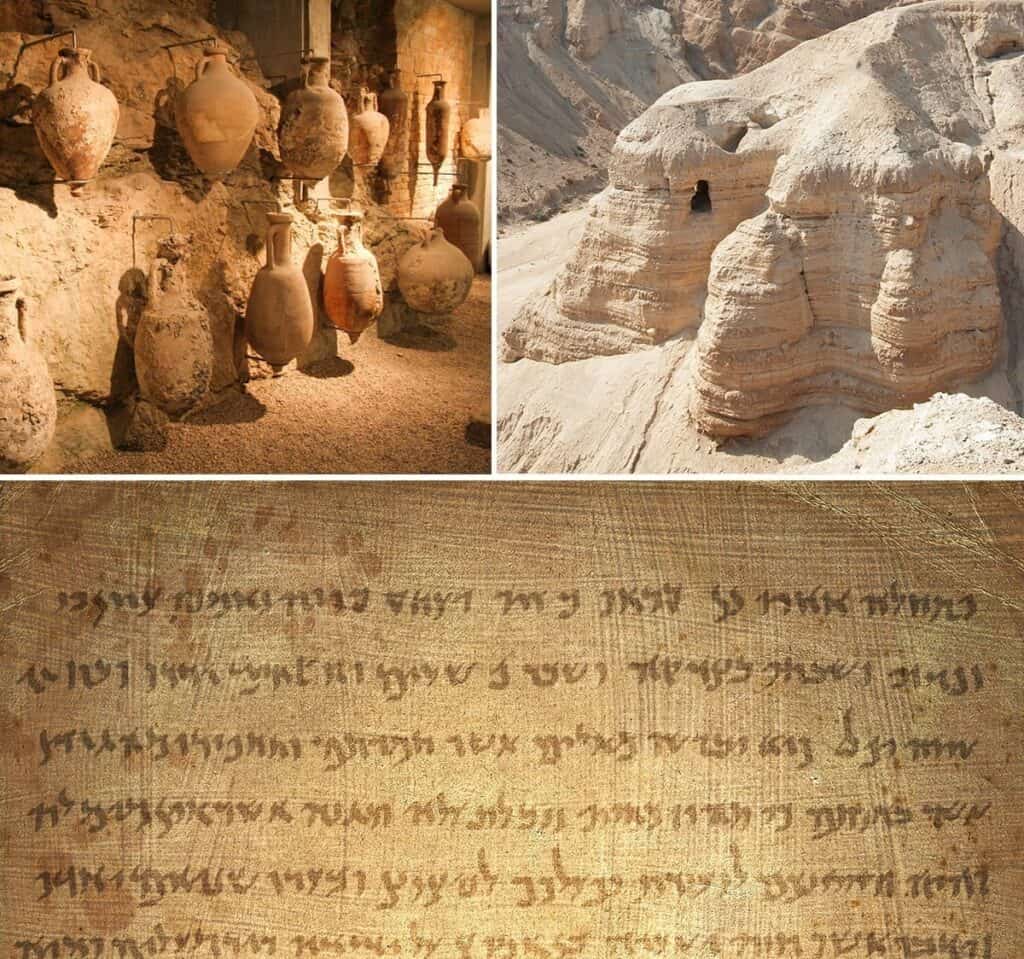
The manuscript discoveries near Qumran, beginning in 1947, added a new cultural image: ancient scroll fragments emerging from desert caves. Public interest grew through museum displays, books, education, documentaries, and recurring arguments about authorship and meaning.
The collection is more varied than the popular label suggests. It includes biblical manuscripts, community rules, legal texts, prayers, interpretations, and other Jewish works from the late Second Temple period. The Dead Sea Scrolls guide explains the collection, and the page on the Essenes and Qumran covers the leading community theory and its limits.
Popular culture often asks for one secret text or one hidden truth. The manuscripts instead reveal a diverse library and a long scholarly conversation.
Film and television use the Dead Sea in different ways
The region appears on screen as landscape, historical setting, scientific subject, environmental warning, and travel experience. A program may be filmed at the shore, use archive material, discuss Masada or the scrolls, or simply place the Dead Sea inside a wider documentary argument. Those are different production claims.
Public broadcasters continue to revisit the subject. PBS has educational material on the scrolls and aired a 2026 Mysterious Landscapes episode focused on the Dead Sea. These documented examples show that the region still works across history, science, and visual destination storytelling.
It is safer to name a verified production than to claim that an unspecified group of biblical epics was filmed here. The Judean Desert can represent antiquity on screen, but a similar-looking landscape does not establish a location credit.
Masada became a story as well as a site
Masada combines surviving Herodian architecture, an unusually visible Roman siege system, Josephus’s final-night account, archaeology, and modern national memory. Screen and print treatments sometimes blend those evidence layers.
The physical site confirms palaces, waterworks, camps, siege lines, and the attack ramp. The detailed mass-death narrative comes from Josephus and is not fully established by archaeology. Our Masada history guide makes that boundary visible, while the Masada visitor page handles changing access details.
Cleopatra and the beauty story
Cleopatra’s name gives modern Dead Sea products an instant ancient pedigree. The secure historical link is narrower: Josephus connects her economic interests with revenues around Jericho, where balsam grew. The text does not document a mud treatment, mineral monopoly, or named cosmetic workshop.
Marketing turned the regional connection into a personal beauty ritual because the combination was easy to remember. The guides to Cleopatra and the Dead Sea and ancient Dead Sea cosmetics separate the evidence from the later image.
What the familiar images leave out
The classic floating photograph rarely shows beach rules, changing shorelines, or the need to keep water away from the eyes and mouth. Scroll imagery can hide the variety of the collection. A Masada silhouette can collapse Herod’s palace and a later Roman siege into one moment.
Good travel culture adds the missing context. Float at a designated beach. Read the site panels. Notice the distances between Qumran, Ein Gedi, Masada, Ein Bokek, Jericho, and the Jordanian shore. The lake is more interesting when it is allowed to remain a place instead of becoming one picture.
Frequently asked questions
When did the floating-reader photograph become popular?
The exact origin of the newspaper version is unresolved. Institutional collections preserve earlier variations, including a man floating with a book and sunshade in an image dated broadly between 1898 and 1946. The motif predates social media and modern destination advertising.
Did Mark Twain visit the Dead Sea?
Yes. Twain visited during his 1867 journey and published his account in The Innocents Abroad in 1869. His description combines observations of the region with the irreverent style used throughout the book.
It remains a well-known English-language travel account, not the beginning of writing about the lake.
What films were shot at the Dead Sea?
Production claims need title-by-title verification. The region appears frequently in documentaries and travel television, while the surrounding desert is also used as a historical visual setting. A program about the Dead Sea is not necessarily filmed entirely at the lake.
How did the scrolls affect popular culture?
They added archaeology, ancient manuscripts, museum display, and scholarly mystery to the Dead Sea’s public image. Popular retellings often emphasize secrets, while the real collection is a diverse library of biblical and nonbiblical Jewish texts.
That difference is why the documented contents are more useful than conspiracy framing.
Why is Cleopatra part of the Dead Sea story?
Josephus connects her with regional revenues around Jericho and its balsam economy. Later beauty marketing expanded that economic link into stories about mud treatments, mineral rights, and workshops that the surviving ancient passage does not confirm.
The historical core is narrower than the familiar advertising version.